
Volume 5 | Issue 10: Citywide Inspection Sweep For Compliance With Phase 1 Re-Start Requirement
While your construction site may have reopened several weeks ago, it is important to remain vigilant in complying with the many requirements mandated as part of this reopening process.
Starting Wednesday, July 8, 2020, DOB Inspectors will be conducting a citywide inspection sweep of every permitted site to verify compliance with State and City Phase 1 restart requirements. For a refresher on these requirements, click HERE
Sites that are found to be non-compliant will be issued a violation with accompanying civil penalties of up to $5,000 and the potential of a Stop Work Order being imposed.
Moving forward, subsequent to a first violation, continued non-compliance may result in additional violations and a fine of up to $10,000 per offense. Some examples of punishable infractions include failure to post safety plan in a conspicuous location on site, not installing adequate hand sanitizing stations or signage indicating reduced capacity by 50% of the Elevator or Hoist not posted on each landing.
The next couple of days provide a great opportunity to ensure that your sites are in full compliance so as to avoid incurring these high penalties.
As always, feel free to call RPO Inc. if you would like to engage us to consult you about satisfying the above requirements or if you have received a violation for alleged non-compliance.
Volume 5 | Issue 9: Restaurant Re-Opening - RPO Can Help!

New York City has established a citywide multi-phase program to re-open restaurant service to patrons. Phase II of the State’s re-opening plan will allow outdoor seating options for restaurants and bars to promote open space and maintain social distancing. NYC DOT has developed criteria and a permit process that will allow for outdoor dining and seating on city owned streets and sidewalks where standards can be met.
Beginning June 19th, permit applications will be accepted for re-opening restaurants on June 22, 2020, with outdoor seating.
There are many standards that must be met and RPO can assist you to meet them quickly and efficiently in order to get you back in business.
We will:
Consult with you about extent of permission that can be obtained for outdoor seating at your location,
Develop and submit your safety plan and submit the requisite affirmations,
Provide you with the industry guidelines you will be required to follow,
Provide you with the logs you will be required to maintain,
Provide you with the required posters.
We will also let you know about changes of requirements as they occur.
New York City will begin accepting applications for outdoor dining starting on June 19, 2020. Please contact Joseph Dodds at jdodds@rpoinc.com or by phone at 212-566-5110 x1137, if you would like to engage RPO to assist you or your tenant obtain permission to re-open a restaurant.
Volume 5 | Issue 8: Guidance For Phase 1 Re-Opening Of Non-Essential Construction In NYC From RPO Inc.
While the anticipated Phase I commencement of non-essential work in NYC has been set for next Monday, it is permissible to immediately begin with staging activities for projects prior to commencement of actual Phase I commercial activities.
These activities may be comprised of an in-person workforce on-site to:
Clean, sanitize, and/or disinfect common and work areas;
Test run hoists, elevators, cranes, and other equipment;
Establish new and multiple entrances/exists to control the movement of personnel and allow for health screening, including temperature taking;
Install hand hygiene/wash stations or retrofit existing ones with touch-less faucets and dispensers;
Install health screening stations or devices at entrances;
Affix social distancing, hygiene, and cleaning/disinfection signage, including posters, markers, and directional arrows;
Deliver and stockpile personal protective equipment (e.g. face coverings, face shields, gloves); and
Order, unload, and rough set materials that specialty contractors or subcontractors need to perform work (e.g. structural supports, piping, conduits, drywall).
(TENTATIVELY) EFFECTIVE MONDAY, JUNE 8, 2020, NON-ESSENTIAL WORK MAY START AGAIN, BUT MUST BE IN ACCORDANCE WITH THE STANDARDS FOR RESPONSIBLE CONSTRUCTION ACTIVITIES IN NEW YORK STATE AS SET FORTH BY THE GOVERNOR BELOW:
No construction activity can occur without meeting the following minimum State standards, as well as applicable federal requirements, including but not limited to such minimum standards of the Americans with Disabilities Act (ADA), Centers for Disease Control and Prevention (CDC), Environmental Protection Agency (EPA), and United States Department of Labor’s Occupational Safety and Health Administration (OSHA).
The following standards apply to all construction activities – both essential and non-essential – in operation during the COVID-19 public health emergency until rescinded or amended by the State.
The following guidance is organized around three distinct categories: people, places, and processes.
I. PEOPLE
A. PHYSICAL DISTANCING
For any work occurring indoors (e.g. construction within an existing building), no more than 1 worker per 250 square feet is allowed on site, excluding supervisors, unless additional personal protective measures are implemented; or
A distance of at least six feet must be maintained among workers at all times, unless safety of the core activity requires a shorter distance (e.g. dry walling, glazing, lifting). Any time employees must come within six feet of another person, acceptable face coverings must be worn. Employees must be prepared to don a face covering if another person unexpectedly comes within six feet.
Acceptable face coverings for COVID-19 include but are not limited to cloth-based face coverings and disposable masks that cover both the mouth and nose.
However, cloth, disposable, or other homemade face coverings are not acceptable face coverings for workplace activities that typically require a higher degree of protection for personal protective equipment due to the nature of the work. For those activities, N95 respirators or other personal protective equipment (PPE) used under existing industry standards should continue to be used, as is defined in accordance with OSHA guidelines.
The number of work stations and employee seating areas, and their use, may be modified or restricted, so that workers are at least six feet apart in all directions (e.g. side-to-side and when facing one another) and are not sharing workstations without cleaning and disinfection between use.
When distancing is not feasible between workstations, the use of face coverings or physical barriers (e.g. plastic shielding walls, in lieu of face coverings in areas where they would not affect air flow, heating, cooling, or ventilation) must be provided and required.
Physical barriers should be put in place in accordance with OSHA guidelines.
Physical barrier options may include: strip curtains, Plexiglas or similar materials, or other impermeable dividers or partitions.
The use of tightly confined spaces (e.g. elevators, hoists, vehicles) by more than one individual at a time, unless all employees in such space at the same time are wearing acceptable face coverings, should be prohibited. However, even with face coverings in use, occupancy must never exceed 50% of the maximum capacity of the space or vehicle, unless it is designed for use by a single occupant. Ventilation with outdoor air should be increased to the greatest extent possible, while maintaining safety protocols, and additional measures to prevent congregation in elevator waiting areas and limit density in elevators, such as enabling the use of stairs, should be taken.
Measures should be put in place to reduce bi-directional foot traffic using tape or signs with arrows in narrow aisles, hallways, or spaces, and post signage and distance markers denoting spaces of six feet in all commonly used areas and any areas in which lines are commonly formed or people may congregate (e.g. clock in/out stations, health screening stations, etc.).
Signs must be posted throughout the site, consistent with DOH COVID-19 signage. Customized signage specific to a workplace or setting can be developed and used, provided that such signage is consistent with the Department’s signage. Signage should be used to remind employees to:
Cover their nose and mouth with a mask or cloth face-covering when six feet of social distance cannot be maintained.
Properly store and, when necessary, discard personal protective equipment.
Adhere to physical distancing instructions.
Report symptoms of or exposure to COVID-19, and how they should do so.
Follow hand hygiene and cleaning guidelines.
B. GATHERINGS IN ENCLOSED SPACES
In-person gatherings (e.g. shapeups, toolbox talks, safety meetings) must be limited to the greatest extent possible and other methods such as video or teleconferencing must be used whenever possible, per CDC guidance “Interim Guidance for Businesses and Employers to Plan and Respond to Coronavirus Disease 2019 (COVID-19)”. When videoconferencing or teleconferencing is not possible, meetings should be held in open, well-ventilated spaces and it should be ensured that individuals maintain six feet of social distance between one another (e.g. if there are chairs, leave space between chairs, have employees sit in alternating chairs).
Practices for adequate social distancing in confined areas, such as restrooms and break-rooms, must be put in place, and signage and systems (e.g. flagging when occupied) to restrict occupancy when social distancing cannot be maintained in such areas should be developed; and
Schedules should be staggered for employees to observe social distancing (i.e., six feet of space) for any gathering (e.g. coffee breaks, meals, and shift starts/stops).
C. WORKPLACE ACTIVITY
Measures should be taken to reduce interpersonal contact and congregation, through methods such as:
Limiting in-person presence to only those staff who are necessary to be on site;
Adjusting workplace hours;
Reducing on-site workforce to accommodate social distancing guidelines;
Shifting design (e.g. A/B teams, staggered arrival/departure times);
Prioritizing tasks that allow for social distancing (e.g. steel erection) over those that do not (e.g. dry walling, glazing); and/or
Avoiding multiple crews and/or teams working in one area by staggering scheduled tasks and using signs to indicate occupied areas.
D. MOVEMENT AND COMMERCE
Non-essential visitors on site should be prohibited.
Designated areas for pickups and deliveries must be established, limiting contact to the extent possible.
On-site interactions (e.g. designate an egress for workers leaving their shifts and a separate ingress for workers starting their shifts) and movements (e.g. employees should remain near their workstations as often as possible) should be limited.
II. PLACES
A. PROTECTIVE EQUIPMENT
In addition to necessary personal protective equipment (PPE) as required for certain workplace activities, acceptable face coverings must be procured, fashioned, or otherwise obtained, and such coverings must be provided to employees while at work at no cost to the employee. An adequate supply of face coverings, masks and other required PPE should be on hand in the event an employee needs a replacement, or a visitor is in need. Acceptable face coverings include, but are not limited to, cloth (e.g. homemade sewn, quick cut, bandana), surgical masks, N95 respirators, and face shields.
Face coverings must be cleaned or replaced after use and may not be shared. Please consult CDC guidance for additional information on cloth face coverings and other types of personal protective equipment (PPE), as well as instructions on use and cleaning.
Note that cloth face coverings or disposable masks shall not be considered acceptable face coverings for workplace activities that impose a higher degree of protection for face covering requirements. For example, if N95 respirators are traditionally required for specific construction activities, a cloth or homemade mask would not suffice. OSHA standards for such safety equipment must be adhered to.
Employees must be allowed to use their own acceptable face coverings, but cannot be required to supply their own face coverings. Further, this guidance shall not prevent employees from wearing their personally owned additional protective coverings (e.g. surgical masks, N95 respirators, or face shields). Compliance with all applicable OSHA standards is required.
Measures should be put in place to limit the sharing of objects, such as tools, machinery, materials, and vehicles, as well as the touching of shared surfaces, such as railings and fences; or, require workers to wear gloves (trade-appropriate or medical) when in contact with shared objects or frequently touched surfaces; or, require workers to sanitize or wash their hands before and after contact.
Workers must be trained on how to adequately put on, take off, clean (as applicable), and discard PPE, including but not limited to, appropriate face coverings.
B. HYGIENE AND CLEANING
Adherence to hygiene and sanitation requirements as advised by the CDC and DOH, including “Guidance for Cleaning and Disinfection of Public and Private Facilities for COVID-19,” and the “STOP THE SPREAD” poster, as applicable, is required. Cleaning logs that include the date, time, and scope of cleaning must be maintained.
Hand hygiene stations must be provided and maintained on site, as follows:
For handwashing: soap, running warm water, and disposable paper towels.
For sanitizer: an alcohol-based hand sanitizer containing at least 60% alcohol for areas where handwashing facilities may not be available or practical.
Appropriate cleaning / disinfection supplies for shared and frequently touched surfaces must be provided, and employees should be encouraged to use these supplies before and after the use of these surfaces, followed by hand hygiene.
Regular cleaning and disinfection of the work site must be conducted, as well as more frequent cleaning and disinfection for high risk areas used by many individuals and for frequently touched surfaces. Cleaning and disinfecting must be rigorous and ongoing and should occur at least after each shift, daily, or more frequently as needed. Please refer to DOH’s “Interim Guidance for Cleaning and Disinfection of Public and Private Facilities for COVID-19” for detailed instructions on how to clean facilities.
Regular cleaning and disinfecting of restrooms must be ensured. Restrooms should be cleaned more often depending on frequency of use.
Distancing rules must be adhered to by reducing restroom capacity where feasible.
Equipment and tools must be regularly disinfected using registered disinfectants, including at least as often as workers change workstations or move to a new set of tools. Refer to the
Department of Environmental Conservation (DEC) list of products registered in New York State and identified by the EPA as effective against COVID-19.
If cleaning or disinfection products or the act of cleaning and disinfecting causes safety hazards or degrades the material or machinery, hand hygiene stations must be put in place for in between uses and/or disposable gloves must be supplied.
Cleaning and disinfection of exposed areas must be provided for in the event of a positive case of COVID-19 of a worker, with such cleaning to include, at a minimum, all heavy transit areas and high-touch surfaces (e.g. shared tools, machines, vehicles, handrails, portable toilets).
CDC guidelines on “Cleaning and Disinfecting Your Facility” if someone is suspected or confirmed to have COVID-19 infection are as follows:
Close off areas used by the person who is sick.
Operations do not necessarily need to be closed, if affected areas can be closed off.
Open outside doors and windows to increase air circulation in the area.
Wait 24 hours before you clean or disinfect. If 24 hours is not feasible, wait as long as possible.
Clean and disinfect all areas used by the person who is sick, such as offices, bathrooms, common areas, and shared equipment.
Once the area has been appropriately disinfected, it can be opened for use.
Workers without close contact with the person who is sick can return to the work area immediately after disinfection.
Per CDC’s “Evaluating and Testing Persons for Coronavirus Disease 2019 (COVID-19),” considerations when assessing close contact include the duration of exposure (e.g. longer exposure time likely increases exposure risk) and the clinical symptoms of the person with COVID-19 (e.g. coughing likely increases exposure risk as does exposure to a severely ill patient).
If more than seven days have passed since the person who is sick visited or used the facility, additional cleaning and disinfection is not necessary, but routine cleaning and disinfection should continue.
Shared food and beverages (e.g. buffet style meals) must be prohibited, bringing lunch from home should be encouraged, and adequate space for employees to observe social distancing while eating meals must be identified and reserved.
C. PHASED REOPENING
Reopening activities are encouraged to be phased-in so as to allow for operational issues to be resolved before production or work activities return to normal levels. A limited number of employees and hours, when first reopening should be considered so as to provide operations with the ability to adjust to the changes.
D. COMMUNICATIONS PLAN
Affirmation that the state-issued industry guidelines have been reviewed, are understood, and that they will be implemented, must be provided.
A communication plan for employees, visitors, and customers should be developed that includes applicable instructions, training, signage, and a consistent means to provide employees with information. Development of webpages, text and email groups, and social media should b considered.
III. PROCESSES
A. SCREENING AND TESTING
Mandatory daily health screening practices must be implemented.
Screening practices may be performed remotely (e.g. by telephone or electronic survey), before the employee reports to the work site, to the extent possible; or may be performed on site.
Screening should be coordinated to prevent workers from intermingling in close contact with each other prior to completion of the screening.
At a minimum, screening should be required of all workers and visitors and completed using a questionnaire that determines whether the worker or visitor has:
(a) knowingly been in close or proximate contact in the past 14 days with anyone who has tested positive for COVID-19 or who has or had symptoms of COVID-19,
(b) tested positive for COVID-19 in the past 14 days, or
(c) has experienced any symptoms of COVID-19 in the past 14 days.
According to the CDC guidance on “Symptoms of Coronavirus,” the term “symptomatic” includes employees who have the following symptoms or combinations of symptoms: fever, cough, shortness of breath, or at least two of the following symptoms: fever, chills, repeated shaking with chills, muscle pain, headache, sore throat, or new loss of taste or smell.
Employees should be required to immediately disclose if and when their responses to any of the aforementioned questions change, such as if they begin to experience symptoms, both during work hours or outside of work hours.
Daily temperature checks may also be conducted per Equal Employment Opportunity Commission or DOH guidelines. Keeping records of employee health data (e.g. temperature data) is prohibited.
Any personnel performing screening activities, including temperature checks, must be appropriately protected from exposure to potentially infectious workers or visitors entering the site. Personnel performing screening activities should be trained by employer-identified individuals who are familiar with CDC, DOH, and OSHA protocols.
Screeners should be provided and use PPE, including at a minimum, a face mask, and may include gloves, a gown, and/or a face shield.
An employee who screens positive for COVID-19 symptoms should not be allowed to enter the worksite and should be sent home with instructions to contact their healthcare provider for assessment and testing. The local health department and DOH must be immediately notified about the suspected case. Information on healthcare and testing resources should be provided to the employee.
An employee who has responded that they have had close contact with a person who is confirmed or suspected for COVID-19 may not be allowed to enter the worksite without abiding by the precautions outlined below and documentation of the employee’s adherence to those precautions has been done.
All employee and visitor responses collected by the screening process on a daily basis must be reviewed and a record of such review must be maintained. A contact as the party for workers to inform if they later are experiencing COVID-19-related symptoms, as noted in the questionnaire must be identified.
A site safety monitor must be designated whose responsibilities include continuous compliance with all aspects of the site safety plan.
To the extent possible, a log of every person, including workers and visitors, who may have close contact with other individuals at the work site or area must be maintained; excluding deliveries that are performed with appropriate PPE or through contactless means. Log should contain contact information, such that all contacts may be identified, traced and notified in the event an employee is diagnosed with COVID-19. Cooperation with local health departments contact tracing efforts is required.
Employers and employees should take the following actions related to COVID-19 symptoms and contact:
If an employee has COVID-19 symptoms AND EITHER tests positive for COVID-19 OR did not receive a test, the employee may only return to work after completing a 14-day self-quarantine.
If an employee is critical to the operation or safety of a site, the local health department and the most up-to-date CDC and DOH standards on the minimum number of days to quarantine before an employee is safely able to return to work with additional precautions to mitigate the risk of COVID-19 transmission may be consulted.
If an employee does NOT have COVID-19 symptoms BUT tests positive for COVID-19, the employee may only return to work after completing a 14-day self-quarantine. If an employee is critical to the operation or safety of a site, the local health department and the most up-to-date CDC and DOH standards on the minimum number of days to quarantine before an employee is safely able to return to work with additional precautions to mitigate the risk of COVID-19 transmission may be consulted.
If an employee has had close contact with a person with COVID-19 for a prolonged period of time AND is symptomatic, the employee should notify their employer and follow the above protocol for a positive case.
If an employee has had close contact with a person with COVID-19 for a prolonged period of time AND is NOT symptomatic, the employee should notify their employer and adhere to the following practices prior to and during their work shift, which should be documented:
1) Regular monitoring: As long as the employee does not have a temperature or symptoms, they should self-monitor under the supervision of their employer’s occupational health program.
2) Wear a mask: The employee should wear a face mask at all times while in the workplace for 14 days after last exposure.
3) Social distance: Employee should continue social distancing practices, including maintaining, at least, six feet distance from others.
4) Disinfect and clean work spaces: Continue to clean and disinfect all areas such as offices, bathrooms, common areas, and shared electronic equipment routinely.
If an employee is symptomatic upon arrival at work or becomes sick during the day, the employee must be separated and sent home immediately, following the above protocol for a positive case.
B. TRACING AND TRACKING
The local health department and DOH must be notified immediately upon being informed of any positive COVID-19 test result by a worker at the site.
In the case of a worker or visitor testing positive, cooperation with the local health department is required to trace all contacts in the workplace, and the local health department must be notified of all workers and visitors who entered the site dating back to 48 hours before the worker began experiencing COVID-19 symptoms or tested positive, whichever is earlier, but confidentiality must be maintained as required by federal and state law and regulations.
Local health departments may, under their legal authority, implement monitoring and movement restrictions of infected or exposed persons including home isolation or quarantine.
Employees who are alerted that they have come into close or proximate contact with a person with COVID-19, and have been alerted via tracing, tracking or other mechanism, are required to self-report to their employer at the time of alert and shall not be permitted to remain or return to the work site.
IV. EMPLOYER PLANS
Completed safety plans must be conspicuously posted on site. The State has made available a business reopening safety plan template to guide business owners and operators in developing plans to protect against the spread of COVID-19. The plan does not need to be submitted for approval, but it must be immediately available for inspection if requested.
An acceptable form of plan is available at [Click to View] which can be completed on-line, printed and kept on-site.
As always, feel free to call RPO Inc. if you would like to engage us to consult you about re-opening your site.
Volume 5 | Issue 7: Requirements For Re-Opening Construction
RPO has been an advocate for the safe resumption of business in New York City. We have secured permission for many of our clients to carefully resume their essential and emergency work. As New York City begins to re-open for business, it is important for businesses to act responsibly and follow all required guidelines. Below are the State guidelines and mandates for resuming construction:
THESE NYS GUIDELINES APPLY TO ALL CONSTRUCTION BUSINESSES THAT HAVE ALREADY BEEN PERMITTED TO RE-OPEN:
CLICK TO VIEW THE NYS GUIDELINES
THE NYS GUIDELINES IN THE LINK BELOW PROVIDE GUIDANCE FOR PHASE I RE-OPENING OF CONSTRUCTION SITES, WHEN THAT OCCURS. AS OF THIS DATE, PHASE I RE-OPENING IN NYC IS SCHEDULED FOR JUNE 8, 2020.
This Interim Guidance for Construction Activities during the COVID-19 Public Health Emergency (“Interim COVID-19 Guidance for Construction”) was created to provide owners/operators of construction projects and their employees and contractors with precautions to help protect against the spread of COVID-19 as indoor and outdoor construction sites reopen. These guidelines are minimum requirements only and any employer is free to provide additional precautions or increased restrictions.
These guidelines are based on the best-known public health practices at the time of Phase I of the State’s reopening, and the documentation upon which these guidelines are based can and does change frequently. Construction sites must adhere to all local, state and federal requirements relative to construction activities. All construction-involved entities are also accountable for staying current with any updates to these requirements, as well as incorporating same into any construction activities and/or Site Safety Plan.
CLICK TO VIEW THE MASTER CONSTRUCTION GUIDANCE
A WRITTEN SAFETY PLAN IS REQUIRED UPON RE-OPENING.
Each re-opening business must develop a written Safety Plan outlining how its workplace will prevent the spread of COVID-19. A business may fill out the template in the link below in order to fulfill the requirement, or may develop its own Safety Plan. This plan does not need to be submitted to a state agency for approval but must be retained on the premises of the business and must be made available to the New York State Department of Health (DOH) or local health or safety authorities in the event of an inspection.
CLICK TO VIEW THE NYS SAFETY PLAN TEMPLATE
RPO IS COMMITTED TO PROVIDING OUR CLIENTS WITH TIMELY, ACCURATE AND USEFUL INFORMATION.
PLEASE CALL RPO AT 212-566-5110 IF YOU WISH TO ENGAGE US TO CONSULT ABOUT REQUIREMENTS IN RESUMING YOUR PROJECTS, OR TO ASSIST YOU IN OBTAINING PERMISSION TO RESUME YOUR ESSENTIAL OR EMERGENCY WORK.
Volume 5 | Issue 6: COVID-19 Construction Update
The mandate that limits construction to only essential or emergency work pursuant to New York State Gubernatorial Emergency Order 202.6, has been extended through June 7, 2020, in New York City.
All licenses/registrations and permits issued by the Department of Buildings and expiring from the beginning of the declaration of the state of emergency through the period of the emergency declaration are extended in accordance with Mayoral Emergency Executive Order 112. Approved sites need to post a new Certificate of Authorization with the expiration date of June 7, 2020.
Permit Renewal Extension
Permits already in effect shall remain in effect until the end of the term for which they were issued. Permits that would have expired during the state of emergency have been extended for the duration of the state of emergency. If the state of emergency is extended, the permit expiration date will automatically be extended, however applicants are still able and encouraged to renew permits in a timely manner.
License Renewal Extension
Licenses/registrations expiring from the beginning of the declaration of the state of emergency through the period of the emergency declaration are extended for the duration of the state of emergency. Affected licenses/registrations will be automatically extended by subsequent orders until the state of emergency in the City of New York is no longer in effect.
Any licensee/registrant who is eligible and can satisfy the requirements for renewal of their license/registration may submit their application for renewal at any time during this period. Following the extension period, licensees/registrants will be subject to all requirements for the renewal of their respective license/registration.
Insurance Requirements
While the expiration date of the permits has been extended, valid insurance required by law or rule is still required and no work can be performed without updated insurance under these extended permits. Licensees/registrants must also ensure that all required insurances are active during this extension period.
Certificates of Authorization
Once a request is approved in the Essential Construction portal, a Certificate of Authorization must be printed for each approved job and posted at the work site. Prior certificates are now valid until June 7, 2020 and a new certificate needs to be printed and posted at the work site.
Please feel free to RPO at 212-566-5110 if you would like to engage us to assist in achieving permission to resume work at your site.
Volume 5 | Issue 5: COVID-19 Essential And Emergency Construction Update
We hope that you are all well and we look forward to restoring normalcy in our business and family lives when it is safe to do so. In the meantime, we would like to make you aware that the NYC Department of Buildings is modifying its guidance about Essential and Emergency work so that it is more specific, and a bit less restrictive.
The important changes are:
Construction of public and private schools are now considered essential;
Work to affordable housing has a lowered threshold from 30% to 20% affordable units and are not limited to vacant buildings;
Construction projects in the energy industry qualify;
Alterations for projects at essential businesses qualify.
Here is the DOB Notice that was issued today:

Please contact our office if you would like RPO to assist you to register your project as essential or emergency work.
Volume 5 | Issue 4: NYC Department Of Buildings Guidance About NYS Governor’s Executive Order 202.6
Guidance to determining whether a business enterprise is subject to a workforce reduction
In accordance with NYS Governor’s Executive Order 202.6 and the Guidance on Executive Order 202.6 and subsequent orders published by NYS ESDC Item 9,
All non-essential construction must shut down except emergency construction, (e.g. a project necessary to protect health and safety of the occupants, or to continue a project if it would be unsafe to allow to remain undone until it is safe to shut the site).
Essential construction may continue and includes roads, bridges, transit facilities, utilities, hospitals or health care facilities, affordable housing, and homeless shelters. At every site, if essential or emergency non-essential construction, this includes maintaining social distance, including for purposes of levators/meals/entry and exit. Sites that cannot maintain distance and safety best practices must close and enforcement will be provided by the state in coordination with the city/local governments. This will include fines of up to $10,000 per violation.
For purposes of this section construction work does not include a single worker, who is the sole employee/worker on a job site.
Only the following construction projects permitted by the NYC Department of Buildings or otherwise regulated by the NYC Construction Codes and the NYC Electrical Code shall be permitted to continue until further notice.
(This guidance does not apply to construction on roads, bridges, and transit facilities that is allowable under the Governor’s Executive Orders and ESDC Guidance).
1. Emergency construction (ESDC Item 9, bullet 1):
a. Project necessary to protect the health and safety of the occupants:
i. Emergency work ordered by the Department;
ii. Restoration of essential services – heat, hot water, cold water, gas, electricity, or other utility services; or
iii. Work necessary to address any condition requiring immediate corrective action that severely affects life, health, safety, property, or significant number of persons.
b. Project required to continue to the extent it would be unsafe to allow work to remain undone. Such project may continue only until it is safe to shut the site.
2. Essential construction (ESDC Item 9, bullet 2):
a. Utilities;
b. Hospitals or health care facilities;
c. Transitional and/ or Homeless shelters;
d. Affordable housing: Construction work on public housing, or a private or multiple dwelling or real property that is a new building (NB) or that is 100% vacant; or is work on unoccupied public housing units for the designation as housing for specific populations (i.e. shelter set aside, domestic violence referrals), or work on the exterior to address emergency conditions requiring immediate corrective action, set forth in Section 1(a)(iii) or within public housing, correction of criticalsystems for seasonal preparedness for the 2020-2021 heating season of an existing public housing building. Construction work on a private or multiple dwelling or real property that is a new building (NB) or that is 100% vacant that is now used or will be converted to such use: (i) For the provision of affordable inclusionary housing or mandatory inclusionary housing pursuant to the New York city zoning resolution; or (ii) Where no less than 30% of the residential units are subject to a regulatory agreement, restrictive declaration, or similar instrument with a local, state, or federal governmental entity or a local housing authority in a city with a population of one million or more.
e. Other essential construction as approved by the Department.
3. Work that is limited to a single worker, who is the sole employee/worker on a job site (ESDC Item 9, bullet 3)
ALL OTHER WORK TO CEASE
All other construction and demolition work permitted by the NYC Department of Buildings or otherwise regulated by the NYC Construction Codes and the NYC Electrical Code shall cease and comply with Buildings Bulletin 2020-004: Click to Read
All complaints from the public or workers should be directed to 311 where a Class “A” complaint will be generated for DOB to address.
For a determination that work is either essential or emergency work in accordance with New York State Gubernatorial Emergency Order 202.6 and subsequent orders and related Empire State Development Corporation guidelines shall be submitted to the Department in a form and manner acceptable to the Department. (No guidance has been provided for this procedure yet, but this notice should be sufficiently clear as to what is and is not permitted).
AFTER HOURS WORK: Any after-hours work variances that have been issued for projects that are not considered emergency work or essential work are no longer valid. Emergency work and essential projects may continue to apply for after-hours work variances; RPO will continue to facilitate this service, if requested.
Volume 5 | Issue 3: Coronavirus (COVID-19) Update & DOB Notification
CORONAVIRUS (COVID-19) UPDATE
Despite the ongoing pandemic, please note that RPO Inc. still have staff personnel in the field to attend meetings or other tasks which can only be achieved by visiting city agencies in person. We are committed to providing our clients the highest level of support!
The rest of our staff will primarily be working remotely. While the NYC Department of Buildings currently remains open, some procedural changes have been implemented. As a result, this change in practice could potentially limit our ability to perform required services as usual and some slow-downs might ensue. However, be assured that project teams are reachable as usual via email or phone so please do not hesitate to contact us. Additionally, keep in mind that RPO Inc. is committed to doing its part to ensure the safety and well-being of our employees and others. Therefore, in accordance with the recommendations of local/national health officials, we are practicing social distancing methods, limiting travel and minimizing face-to-face meetings.
DOB NOTIFICATION CONCERNING
COVID-19
New York City’s guidelines still have not called for a stoppage on construction activity. However, please be advised that if you do decide to close down your construction site, you must inform Department of Buildings and the following requirements must be followed:
Have the site secured to prevent access from any unauthorized personnel. This includes maintenance of construction fencing and posting of permits.
Maintain and secure all scaffolding, debris netting, sidewalk sheds, and temporary walkways.
Maintain all adjoining property protection.
Maintain all guardrails, edge protection systems such as netting and cocoon systems, and floor and shaft opening protection.
Store and maintain cranes in accordance with manufacturer recommendations and approved CN drawings.
Ensure the proper shoring of excavated sites or backfill.
Ensure construction equipment is safely stored and maintained in accordance with manufacturer recommendations.
Ensure construction materials are safely stored. Any light-weight materials susceptible to becoming wind-borne must be removed from the site, tied-down, or ballasted.
Maintain any fire suppression and detection systems.
Maintain all essential utilities.
Remove any volatile gases and liquids.
Remove any standing water and construction debris.
Ensure public sidewalks are clear and clean.
Obviously, this is a rapidly evolving situation and we will continue to keep you apprised moving forward. For more information on the above changes, please contact RPO Inc.
Volume 5 | Issue 2: New Signage Requirements And Changes To Local Law 11, Facades Inspection And Safety Program (FISP)
SIGNIFICANT CHANGES TO LOCAL LAW 11, FACADE INSPECTION AND SAFETY PROGRAM (FISP)
New rules adopted January 14, 2020 have made substantial changes to inspections, reporting requirements, and civil penalties associated with New York City Department of Buildings Facade Inspection and Safety Program (FSIP).

The following significant changes will go into effect for Cycle 9 of the FISP:
New Standards for Façade Inspectors: Qualified Exterior Wall Inspectors (QEWI’s) are now required to have seven or more years of experience. QEWIs will have to provide detailed resumes to the NYC DOB to show that they have relevant experience and knowledge of NYC building codes and facade rules.
The NYC DOB will now require more comprehensive facade examinations and more detailed reporting requirements with increased description of observations and photographic evidence of inspections.
Financial penalties for owners have been significantly increased for failure to file reports, as well as late filings, and failure to correct unsafe conditions, when extensions of time have not been granted.

For more information on the new FISP Cycle 9 please contact RPO Inc.
New Signage Requirements for Privately Owned Public Spaces (POPS)

The City Council recently adopted a zoning text amendment that updates public space signage regulations at privately owned public spaces (POPS).
It requires that all new and existing POPS, including plazas, arcades, sidewalk widenings and other publicly accessible spaces that were created by a variance or floor area bonus, install a signage scheme incorporating the new, specific POPS signage / symbol. Proposed designs are to be submitted for review by the City Planning Commission by Aug. 3, 2020, if the POPS does not have signage installed that was previously approved by DCP.
POPS that already have signage that was previously approved by DCP have until Feb. 5, 2022, to submit new signage schemes.
Volume 5 | Issue 1: Local Law Of 512 of 2016, Inspection Filing Process, Violation Notification Requirement & Excessive Violations In Multiple Dwellings
LOCAL LAW 152 OF 2016
PERIODIC INSPECTION OF GAS PIPING
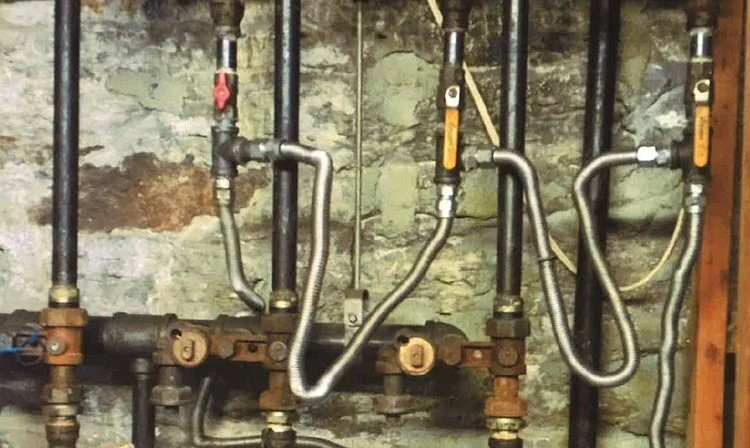
RPO previously reported about Local Law 152 which became effective November 2, 2019, with required inspections set to commence the period beginning on January 1, 2020.
Local Law 152 of 2016 will require periodic inspection of gas piping in buildings other than R-3 dwellings.
For existing buildings, an inspection must be conducted every four years by a licensed master plumber or their subordinate. New buildings require their first inspection after 10 years from completion.
The inspector will be required to inspect all exposed gas lines from the point of entry and throughout service spaces and public spaces up to tenant spaces. This does not include gas piping within apartments. The inspection will seek evidence of excessive corrosion or deterioration, dangerous conditions, illegal installations, and non-code compliant installations. It will also incorporate use of gas leak detectors.
DATE RANGE FOR INSPECTION
BUILDINGS IN COMMUNITY DISTRICTS
January 1, 2020 – December 31, 2020
Districts: 1, 3 and 10 in all boroughs
January 1, 2021 – December 31, 2021
Districts: 2, 5, 7, 13, and 18 in all boroughs
January 1, 2022 – December 31, 2022
Districts: 4, 6, 8, 9, and 16 in all boroughs
January 1, 2023 – December 31, 2023
Districts: 11, 12, 14, 15, and 17 in all boroughs
Subsequent inspections must be completed no later than December 31st within every fourth calendar year thereafter.
Inspection Filing Process
LL152 inspections must occur within the calendar year denoted in the Inspection Cycle for those applicable buildings. Within 30 days of the inspection, the licensed master plumber (LMP) must provide to the building owner a Gas Piping System Periodic Inspection Report (GPS1).
Within 60 days of the inspection, the OWNER must submit to DOB a Gas Piping System Periodic Inspection Certification (GPS2) signed and sealed by the LMP who conducted or supervised the inspection. GPS2 submission is to be completed by the Building Owner on the NYC Department of Buildings GPS2 submission portal. There is no filing fee. According to DOB, no login will be required but DOB reiterated that the law and rule state that the owner must submit the GPS2 form that has been completed by the LMP.
If the Inspection Certification submitted to DOB indicates that conditions requiring correction were identified in the Gas Piping System Periodic Inspection Report submitted to the owner, the owner must submit to DOB, within 120 days of the inspection, an Inspection Certification signed and sealed by the LMP who conducted the inspection, stating that the conditions have been corrected.
If the Inspection Certification submitted to DOB indicated that additional time was needed to correct the condition(s) identified in the Inspection Report, the owner must submit, within 180 days of the inspection, an Inspection Certification signed and sealed by an LMP stating that all conditions have been corrected.
Correction of conditions identified in the Inspection Report must be performed in compliance with the NYC Construction Codes, including obtaining any required work permits.
All reports and certifications must be kept on file by the inspection entity and the building owner for 10 years.
Failure to submit certification will be classified as a major violation and may result in a civil penalty up to $10,000.00.
VIOLATION NOTIFICATION REQUIREMENT
For our property management clients – please be advised that the following sections concerning notification of violations to occupants of dwelling units have been incorporated in the Building Code. Make sure that proper notifications are posted when there are active violations at your address.
§28-204.1.2 Notice of violating conditions outside of occupied dwelling units. An owner must post a copy of a notice of violation that relates to a violating condition outside of an occupied dwelling unit, including in a common area or affecting all residents, of such owner’s building in a conspicuous manner in the building’s lobby until such violation has been closed. In addition, such owner shall post a flyer or pamphlet, created by the department, with information about the adjudication process. Such notice of violation and flyer or pamphlet shall be posted as soon as practicable, but no later than five calendar days after it has been served.
§28-204.1.3 Notice to occupants of violating conditions in occupied dwelling units. An owner must distribute a copy of a notice of violation to the resident of an occupied dwelling unit where such violation relates to a violating condition that is present within such dwelling unit, and to residents of occupied dwelling units adjacent to such dwelling unit. In addition, such owner shall provide such residents with a flyer or pamphlet, created by the department, with information about the adjudication process. Such notice of violation and flyer or pamphlet shall be distributed to such occupied dwelling units as soon as practicable, but no later than five calendar days after it has been served.
EXCESSIVE VIOLATIONS IN MULTIPLE DWELLINGS

RPO has long advocated that building owners should make best and immediate efforts to resolve open violations and to sign-off or withdraw filings for completed or abandoned work. The law for multiple dwellings below seems to be a first step toward limiting building owners’ ability to conduct business at the Department of Buildings if they ignore violations. While the violation threshold under this section of law will only affect the most egregious offenders, this new section supports the importance of resolving violations and open applications, which tend to come to light at the most inopportune moments such as during refi or sales of properties. Please contact RPO if you require assistance closing out any open applications or violations.
§28-105.1.3 Denial of permits for excessive violations. The commissioner shall, no less than once every six months, compile a list of multiple dwellings that includes:
All multiple dwellings containing fewer than 35 units that have a ratio of open hazardous or immediately hazardous housing maintenance code violations or immediately hazardous or major construction code violations that equal in the aggregate three or more such violations for every dwelling unit in such multiple dwelling; and
All multiple dwellings containing 35 units or more that have a ratio of open hazardous or immediately hazardous housing maintenance code violations or immediately hazardous or major construction code violations that equal in the aggregate two or more such violations for every dwelling unit in such multiple dwelling. The commissioner shall not issue permits for multiple dwellings on such list. If the owner of a multiple dwelling on such list corrects open hazardous or immediately hazardous housing maintenance code violations or immediately hazardous or major construction code violations in such multiple dwelling so that the ratio of such violations to the number of dwelling units in such multiple dwelling falls below those outlined in this section, the commissioner shall remove such multiple dwelling from such list. Such denial shall not apply where a dwelling unit within such multiple dwelling is owned as a condominium or held by a shareholder of a cooperative corporation under a proprietary lease.
Exceptions:
Where the issuance of such permit is necessary to correct an outstanding violation of this code, the housing maintenance code or any other applicable provisions of law or rule.
Where the issuance of such permit is necessary to perform work to protect public health and safety.
For a portion of a property occupied by a tenant who is not an owner of such property or responsible for any existing violations in such property.
Where a property was the subject of an in rem foreclosure judgment in favor of the city and was transferred by the city to a third party pursuant to section 11- 412.1 of the code.
Where a property is the subject of a court order appointing an administrator pursuant to article 7-a of the real property actions and proceedings law in a case brought by the department of housing preservation and development.
Where a property is the subject of a loan provided by or through the department of housing preservation and development or the New York city housing development corporation for the purpose of rehabilitation that has closed within the five years preceding the application for such permit.
For a property where the department of housing preservation and development or the New York city housing development corporation notifies the commissioner that the permit is required in connection with the implementation of a program of such department or corporation.
Volume 4 | Issue 8: Sustainable Roofing Zone Requirements & Stand-Off Brackets Attached To Cornice Hooks (C-Hook) Are Prohibited Until Further Notice
Sustainable Roofing Zone Requirements

Effective November 15, 2019, Local Laws 92 and 94 of 2019 will amend the 2014
Administrative Code and Chapter 15 of the New York City Building Code to require, subject to certain
exceptions (see below), new buildings, new roofs resulting from enlargement of existing buildings, and existing building replacing an entire existing roof deck or roof assembly to be provided with a “sustainable roofing zone,” 100 percent of which must be a solar photovoltaic electricity generating system, a green roof system, or a combination thereof.
Projects with construction documents approved on or after November 15, 2019 are subject to the requirements of LL 92 and 94 of 2019, unless the construction documents have attained BIS job status K (plan exam partial approval) prior to such date.
Projects with roof work as described above will be required to comply except the following:
Areas required to be set aside for setbacks or access pursuant to the New York City Fire Code, New York City Construction Codes or the Zoning Resolution of the City of New York. For example, rooftop access areas required by Fire Code section 504.4 and 512.3.1 that must be kept clear are excluded from the sustainable roofing zone.
Areas occupied by rooftop structures, water towers, greenhouses, mechanical equipment, towers, antennas, parapets, guardrails, solar thermal systems, equipment access pathways and appurtenances.
Areas occupied by obstructions related to stormwater management practices including, but not limited to, cisterns, or reuse systems that are installed to comply with site connection or stormwater construction permits issued by the Department of Environmental Protection.
Building setbacks including terraces that are existing non-complying pursuant to the New York City Zoning Resolution, or that are voluntarily provided. However, each setback must comprise less than 25 percent of the area of the largest floor plate in the building.
Recreational spaces that are integral to the principal use of the building on which the rooftop is located, including but not limited to playgrounds and participant sport areas for sports facilities and schools,
Quality Housing recreation spaces, roof terraces and passive recreation areas that are documented on the certificate of occupancy or Department of Buildings approved filing as outlined in Building Bulletin 2018-002.
Pitched roofs (roof slopes greater than 17 percent) that would accommodate less than 4kW of solar photovoltaic electricity generating capacity. Supporting documents, including calculations and shading report by a qualified contractor or NYS registered design professional, shall be submitted. See Part D2 below.
Areas where site conditions are determined by the Department to be unfavorable to either a solar photovoltaic electricity generating system or a green roof system. For example, in cases where the entire roof assembly including roof deck is replaced, but the building structure cannot support the added weight of a sustainable roofing zone, a statement by a NYS registered design professional shall be submitted to the Department to substantiate the practical difficulty due to structural limitation.
STAND-OFF BRACKETS ATTACHED TO CORNICE HOOKS (C-HOOKS) ARE PROHIBITED UNTIL FURTHER NOTICE

In accordance with §28-113.1, until such time as the Department is able to further study the utilization of stand-off brackets and promulgate regulations to ensure their safe installation and use, the installation or use of a stand-off bracket attached to a cornice hook (C-hook) to provide a suspended scaffold additional outreach from the face of a parapet or wall is hereby prohibited.
The Department has identified the use of a stand-off bracket as a contributing factor in recent suspended scaffolding incidents.
A stand-off bracket is a rigid member that extends an assembly. This bulletin applies to the installation or use of a stand-off bracket attached to a cornice hook (C-hook) in order to provide a suspended scaffold additional outreach from the face of a parapet or wall. See illustration above.
Volume 4 | Issue 7: New Requirement: Site Safety Training Information - Signs At Construction Sites
New Requirement: Site Safety Training Information - Signs at Construction Sites

Beginning October 15, 2019, general contractors must post worker safety information signs at construction sites where site safety training is required.
The signs must:
Contain specific information about required worker safety training, including all site safety training deadlines and the number of required training hours, and the information must be in all the languages used by workers to communicate at the construction site.
In addition, the signs must be clearly visible to workers and must be posted at the construction site as follows:
Sites with construction fencing must post a sign at each egress point on the inside of the construction fencing, including vehicle delivery fence gates and existing loading docks.
Sites without construction fencing must post a sign at each egress point within the controlled access zone where construction is taking place and at each existing loading dock or location being used for construction delivery or access.
To comply with the new requirements, the posted sign must:
Be 44 inches wide and 30 inches high;
Have letters at least 1 inch (25 mm) high;
Have white letters on a blue background; and
Be made of a durable and weatherproof material such as vinyl, plastic, or aluminum that is flame retardant.
Signs must be posted in all first languages spoken by workers at the site.
Volume 4 | Issue 6: NYC DOT 2019 Holiday Construction Embargo Notification
NYC DOT 2019 HOLIDAY CONSTRUCTION EMBARGO NOTIFICATION

A Department of Transportation Holiday Construction Embargo shall be in effect from 6:00 am Friday, November 15th through 11:59 pm Thursday, January 2nd. During this time, only emergency work may be performed provided an emergency number is received from the New York City Department of Transportation unless specific permission to work during the embargo is obtained prior to that time. Any non-emergency permits issued prior to the date of this notice shall be considered to be suspended unless special permission is granted. Utility cover openings will also be restricted unless an emergency authorization number is obtained from the Department of Transportation. There will be strict enforcement of this embargo with non-compliance resulting in violations, stop work orders and revocation of permits.
Please note, the deadline for submission of requests to work during the Holiday Embargo period, is Thursday, October 31, 2019, but we strongly advise applying as far in advance as possible.
We will automatically apply for permission to work during the construction embargo for all clients we obtain DOT permits for in the affected areas.
Clients who have questions about how the embargo affects their projects should feel free to contact Joe Dodds or Ginette Celestin at 212-566-5110.
Volume 4 | Issue 5: 14+ Foundation Annual Cocktail Benefit

Rarely do I reach out and ask clients to participate in philanthropic endeavors. No doubt we all receive numerous solicitations each year and we all have our own priorities about which causes to support.
Having said that, I would like to introduce the 14+ Foundation, to let you know that I am on its fundraising committee, and to invite you to join me in supporting it. This foundation was established to develop, build and operate schools and orphanages in rural African communities.
It was co-founded by someone who I know personally and have much admiration and respect for - Joe Mizzi. Knowing Joe and participating in many past events, I know first-hand the passion and care that has gone into this cause, and I am familiar with the outstanding work this group has achieved.
I am proud to be a part of the 14+ Foundation and I ask that you read about it and consider joining me in supporting it. Here is a link to the website (14+ Foundation) and an exciting up-coming event on October 10th. I hope you will be able to join me there.
Thursday, October 10th, 2019
Cocktail Benefit: 6 PM - 11 PM
Sony Hall
235 West 46th Street, NYC
If you would like any information about the foundation or event, please feel free to contact me.
Thank you for your consideration,
Michael Pressel
Volume 4 | Issue 4: Local Law 158 Of 2017: Restriction On Professionally Certified Filings - Now In Effect!

Local Law 158 of 2017 is now in effect. It mandates that buildings that have work without a permit violation civil penalties imposed on or after August 28, 2018, will have a restriction that will preclude the ability to file Professional Certification filings until one year after the date the violation was imposed.
Furthermore, Local Law 158 of 2017 mandates that any other work without a permit violations issued in the successive year following the first work without a permit violation will be subject to civil penalties of two times the scheduled amounts and will also be subject to additional inspection fees when the violating conditions are corrected.
This Local Law is very important to design professionals and owners when developing filing strategies and timelines. RPO will notify its clients when they are not able to Professionally Certify filings due to application of Local Law 158 restrictions at their project sites.
Volume 4 | Issue 3: DOB NOW Expanding Requirement For Certain Applications & Deadline Extended For Local Law 196 Site Safety Training Requirements
Department of Buildings Notice: DOB NOW Expanding Requirement for Certain Applications

Effective Monday, July 1, 2019, all Department of Buildings applications for Mechanical Systems, Structural, Plumbing, Sprinkler and Standpipe work MUST be filed through the DOB NOW: Build portal. All other methods for filing this work will be phased out for work that has not already been filed.
All design professionals, owners and contractors must be registered with DOB NOW in order to properly use the system.
Given the short period of time between now and the effective date of this change, RPO recommends that all stakeholders register to use DOB NOW as soon as possible. For more information on stakeholder involvement and DOB NOW registration, please see our Volume 2, Issue 10 Newsletter
Please call our office if you would like us to assist you with DOB NOW registration.

DEADLINE EXTENDED FOR LOCAL LAW 196
SITE SAFETY TRAINING REQUIREMENTS
On May 8th, the New York City Council passed legislation extending the deadline for the second phase of Local Law 196, which requires 30 hours of site-safety training for workers and 62 hours of site-safety training for supervisors, to December 1, 2019.
Workers and supervisors are encouraged to obtain training in a timely manner. Information on Local Law 196 safety training requirements can be found on the Safety page of DOB's website, and details of the deadline extension can be found in the associated Service Notice.
2019 CONTRACTOR CALENDARS ARE AVAILABLE!

Please contact our office at (212) 566-5110 to receive yours.
Volume 4 | Issue 2: On-Site Safety Inspections Site Safety Plans

In response to the construction accidents that have occurred in the past two weeks, the NYC Department of Buildings has significantly increased the number of unscheduled on-site safety inspections.
Particular focus is being given to coordination of site safety plans with field conditions. Remember, if a project is an actual site safety project that was originally reviewed by the Construction Safety Compliance Unit, any changes to the plans must be resubmitted to the unit for review and approval.
And as of November 2017, in addition to requirements for major buildings, all jobs requiring a Registered Construction Superintendent also require a Site Safety Plan. The SSP must be kept on site at all times and available upon request, until all work is completed and signed off.
Failure to have an adequate SSP on site and readily available may result in a full stop work order and/or the issuance of a Summons. DOB has quadrupled penalties for the most serious safety infractions and it has added more than 250 inspectors since 2015 in an effort to step up safety, so the likelihood of receiving a violation and the costs to remedy are both extremely high.
Reminder: RPO can prepare Site Safety Plans for your projects. Please call or email us with any questions you may have.
------------------------------
2019 CONTRACTOR CALENDARS ARE AVAILABLE!
Please contact our office at (212) 566-5110 to receive yours.
Volume 4 | Issue 1: Elevator Door Monitoring Requirements Looming

New York City adopted ASME A17.3 of 2002, as modified by Chapter K3 of Appendix K Section 3.10.12 of the New York City Building Code, which requires retroactive elevator upgrades to some equipment prior to January 1, 2020.
This code applies to all existing automatic passenger, service and freight elevators. Depending on age, the equipment may require modifications to the existing controller system or upgrade/replacement if it is an older system. Again, this requirement applies only to automatic elevators. Buildings with manual passenger or service elevators that have manually operated doors and gates do not have to meet this new code requirement. The requirement is to prevent the elevator from operating under any circumstance with its doors open.
All controllers built to meet the A17.1-2000 Code should have the door lock monitoring provisions built in. Prior to that, NYC followed the A17.1-1996 Code which makes it probable that older equipment does not meet the new standard. There is a great deal of equipment that only requires minor software/hardware tweaking in order to bring it into compliance; this should be evaluated by your elevator vendor.
Since some equipment will require undergoing major modernization, it would prudent to be mindful of the January 1, 2020, compliance deadline. Thereafter, the City will enforce by use of violations and cease of use orders for non-compliance.
The process to demonstrate compliance is as follows:
Application must be filed by an elevator agency director approved by the Buildings Department, rather than a design professional, if changes are being made.
Design drawings, including approval letter(s) from the controller manufacturer or registered design professional, are not required to be submitted to the Department, but must be kept in the premises’ machine rooms and made available to the Department upon request.
Tests and inspections must be performed by an approved elevator inspection agency (applicant) and witnessed by an approved elevator inspection agency not affiliated with the agency performing the test.
Volume 3 | Issue 7: Local Law 152 of 2016 - Periodic Inspection of Gas Piping

Commencing January 1, 2019, Local Law 152 of 2016 will take effect which requires periodic inspection of gas piping in buildings other than R-3 dwellings.
For existing buildings, an inspection must be conducted every five years by a licensed master plumber or their subordinate. New buildings require their first inspection after 10 years from completion.
The inspector will be required to inspect all exposed gas lines from the point of entry and throughout service spaces and public spaces up to tenant spaces. The inspection will seek evidence of excessive corrosion or deterioration, dangerous conditions, illegal installations, and non-code compliant installations. It will also incorporate use of gas leak detectors.
There will be a reporting/certification procedure put in effect that must be adhered to. Failure to submit certification will be classified as a major violation.
RPO will keep you apprised of the specific reporting requirements as they become available.
Volume 3 | Issue 6: DOB Announces Deadline Changes For Construction Safety Training Requirements

DOB has extended the deadline by which many of the city's construction workers will need to have at least 30 hours of safety training, and by which construction supervisors will need 62 hours of training.
This requirement was set to kick in on December 1, 2018; workers will now have until June 1, 2019 to complete this training. These workers are already required to have a minimum of 10 hours of safety training and the 10-hour requirement remains unchanged.
In addition, DOB will extend the law's final deadline, by which workers will need 40 hours of training, from May 1, 2019 to September 1, 2020.